Examples from campaigns that work
ChatGPT Ads How To
How to set up ChatGPT ads for the best results based on case studies
The 5 rules at a glance
Each rule comes from campaigns that brought in customers. Tap a rule to read more.
- 1Make your ad the next step of the chatYour ad offers exactly what the person wants to do next.
- 2Track sales with the pixel and the Conversions APITwo messengers report every sale, so none gets lost.
- 3Let ChatGPT learn from views, tooChoose conversions, billed on impressions.
- 4Tell ChatGPT who your customer is and which words they useWrite who your best customer is and the words they search for.
- 5Show a face in the ad imageA face catches the eye, even in a tiny picture.
1Rule 1
Make your ad the next step of the chat
Your ad offers exactly what the person wants to do next.
I'm an online coach. How do I win clients with Facebook ads?

Ads that get coaching clients
See the system that helps coaches in 21 niches.
Page: the video first, then the call
Why
People ask ChatGPT to find, compare and choose. An ad that fits the chat feels like help. Ads that look like ads and break into the chat get skipped.
How
- 1Write down the chats your best customer has about your product.
- 2Ask: what does this person want to do next?
- 3Make that next step the offer in your ad and on your page.
What to do
Read your ad right after the chat. Does it sound like the next sentence?
Dive deeper
- The chat often answers the first questions already. In one test, people from ChatGPT went to the demo page more often. People from Google more often read “how it works” first.
- A click from someone who does not know you yet still needs an easy first step: sign up, no card, a low price.
- Test with a daily budget. In one test, a campaign budget spent all its money in a single day.
2Rule 2
Track sales with the pixel and the Conversions API
Two messengers report every sale, so none gets lost.
The pixel is a small piece of code on your page. It tells ChatGPT when someone buys. The Conversions API sends the same message from your server.
Why
If one message gets lost, the other still arrives, and ChatGPT counts each sale only once. For a typical advertiser, both together counted 69% more sales, and each sale cost 22% less.
How
- 1Ads Manager → Tools → Conversions → create a data source.
- 2Put the pixel code at the top of your page.
- 3Create one event for what you sell, such as “order created”. Send it from the page and from your server.
What to do
Watch the events come in. Then check the quality score from 1 to 10 and fix what it points out.
Dive deeper
- The message from your server needs its own Conversions API key.
- Both messages carry the same details, so ChatGPT knows it is one sale. OpenAI's help pages list them.
- The quality score warns about missing details, late messages and messages sent twice.
- Shopify shops can connect everything with the ChatGPT Ads app.
- Ads Manager shows the click and the first sign-up. You count the calls and sales behind it yourself. For long sales to companies, a tool that shows which companies visited helps you judge early.
3Rule 3
Let ChatGPT learn from views, too
Choose conversions, billed on impressions.
An impression means one person saw your ad.
Why
Some people click and buy right away. Others see the ad, look around and buy later. With impressions, ChatGPT learns from both. Of the people who bought within a day after only seeing the ad, 52% bought within the first hour.
How
- 1In the campaign wizard, choose the goal Conversions.
- 2Pick your event.
- 3Set billing to Impressions.
What to do
Open the campaign and check three things: Conversions, your event, Impressions.
Dive deeper
- A goal based on clicks only learns from people who click and then buy.
- Your account does not offer conversions yet? Pick your event anyway. One campaign that could only buy clicks still brought sign-ups, calls and a sale.
- In one test, the goal Reach barely spent. The same idea with the goal Clicks got more clicks for less money.
4Rule 4
Tell ChatGPT who your customer is and which words they use
Write who your best customer is and the words they search for.
The context hint is a short note in each ad group. It tells ChatGPT when your ad fits a chat.
WhoMy ideal customer is an online coach who wants to win new clients with ads.WordsPeople search for things like: Facebook ads for coaches, Instagram ads for coaches, Meta ads for coaches.
Why
Words alone reach too many people. A description alone can reach too few. Together they find the right people, and enough of them.
How
- 1Start with: “My ideal customer is …”. Name the job and the kind of company.
- 2Add: “People search for things like: …” with the keywords that already sell.
- 3Make one ad group for each kind of customer.
What to do
Check that the ad keeps spending and that the people who sign up match your description.
Dive deeper
- Copy the keywords from your best Google Ads groups. Let AI write the customer description from your product page.
- Use the questions from your sales calls. Write them the way people type: “I need software that solves this for a company my size” instead of “best software”.
- One campaign wrote a hint only for coaches looking for Facebook or Instagram ads. 9 of the 10 people who filled in the survey were coaches.
- A sharper hint brings fewer clicks, from bigger companies that fit better.
- A single keyword in [brackets] stopped the ads. So did a very long hint.
5Rule 5
Show a face in the ad image
A face catches the eye, even in a tiny picture.
Ads that get coaching clients
See the system.
Looks at you: the eye stays on the face

Ads that get coaching clients
See the system.
Looks at the offer: the eye follows
Why
The ad picture is tiny. People look at faces about 16 times more than at other spots. A face also builds trust.
How
- 1Use a photo of yourself with what you sell.
- 2The picture is square and small. Keep it simple.
What to do
Try different angles and gestures. Let the face look toward your offer.
Dive deeper
- In one experiment, people looked at faces 16.6 times more than at other spots of the same size, even when they were told to look away.
- When the person in an ad looks at the product, readers look longer at the product and at the logo.
- One campaign used 3 face photos and 2 headlines in every group. That makes 6 ads per group, so a winner can show up.
One campaign, start to finish
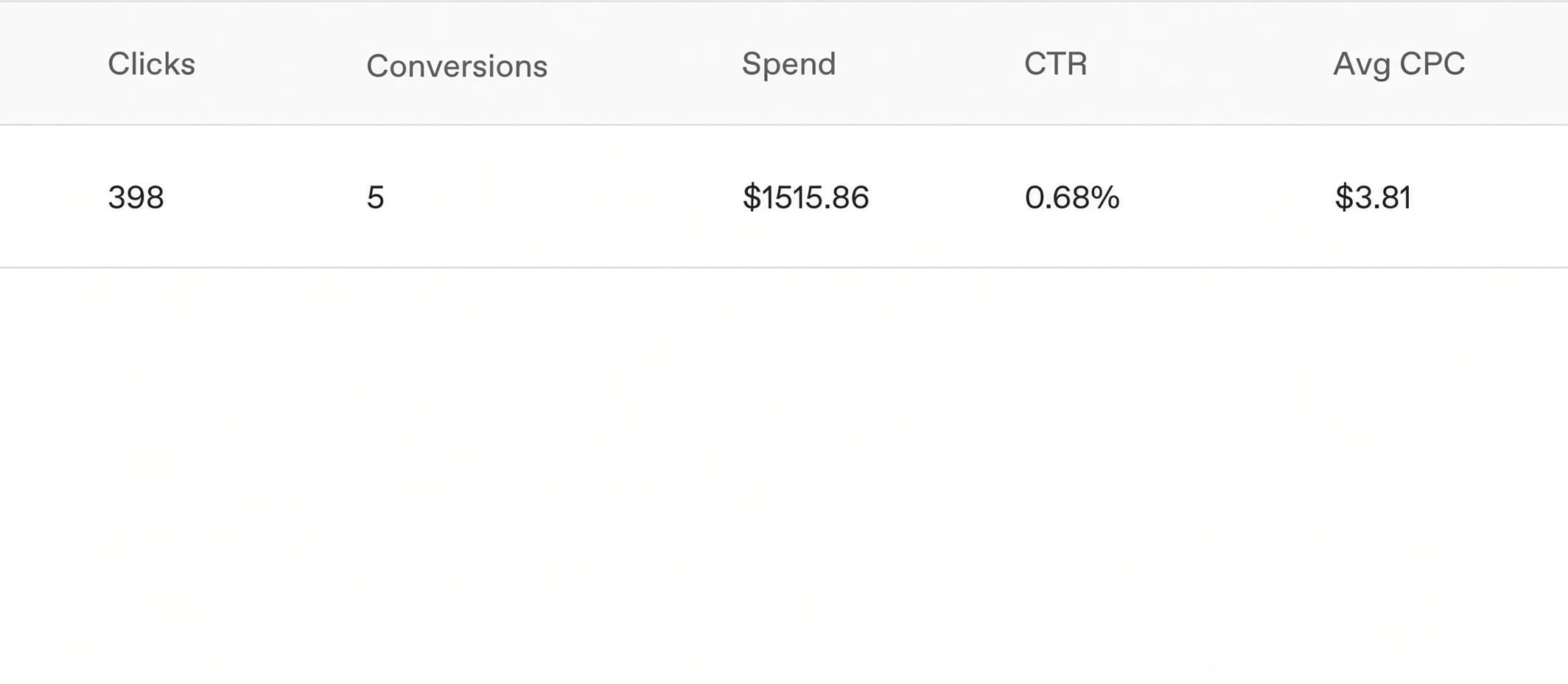
A coaching business in the United Kingdom used a narrow hint, face photos and a page that continues the chat. Here is what 15 days brought.
- $100
- budget a day
- $3.81
- per click on average
- $71
- per sign-up
- 4 × 6
- groups × ads
For the first 2 to 3 days, the ads spent nothing. The bid per click started at $4 and went up later so the full budget could run. Four of the five calls were still to come.
- 398clicked the ad
- 21signed up
- 10answered 7 questions
- 5booked a call
- 1bought on the first call
How to set up ChatGPT Ads for an online course
Follow this step by step tutorial to set up a campaign that brings in conversions.
Common questions about ChatGPT ads
Do ChatGPT ads work?
They can. One coaching business spent just over $1,500 in 15 days. 398 people clicked, 5 booked a call, and the first call ended in a sale.
How much does a ChatGPT ad click cost?
$3.81 on average in that campaign. OpenAI suggests starting with a maximum bid of $3 to $5 per click.
Which campaign goal should I choose?
Conversions, billed on impressions, if your account offers it. Then ChatGPT learns from people who click and from people who only saw the ad.
What should I write in the context hint?
Who your best customer is, plus the words they search for. Keep the hint exact and short, so the ad keeps running.
Which image works best for a ChatGPT ad?
A photo of a face next to what you sell. Faces catch the eye, even in a tiny picture.
The next step
Whether ChatGPT ads pay off for you depends on your price and your page. Check it here.
Lead test for courses over $700Check for free whether ChatGPT ads can pay off for your page